Most blocked toilets come down to something that should never have gone into the pan, and in a busy household that can happen more than once a year. Monster Drainage clears toilets and the pipes behind them across Reigate, Woodhatch, South Park and the rest of RH2. We find where the blockage sits, clear it, and explain what caused it so you know how to stop it happening again.
What Ends Up Blocking a Family Toilet
Wet wipes are the most common culprit. They are made to stay strong when damp, so they keep their shape in the water and snag on any rough joint or bend. A few of them together can form a mat that holds back everything behind it.
Sanitary towels, tampons, nappies and cotton buds cause similar trouble. Too much paper in one go can do it as well, especially the thick quilted kind, or a large wad flushed with a cistern that is not filling properly.
Then there are the things nobody owns up to. Small toys, toothbrushes, bottle tops and the plastic cages from rim blocks all find their way into toilets in homes with young children. A solid object often lodges in the bend at the base of the pan, where a plunger only pushes it tighter.
Downstairs Cloakrooms and Toilets on Long Runs
A cloakroom toilet squeezed under the stairs or fitted into a converted garage often needs a long, shallow pipe to reach the drain. With less fall, waste moves more slowly and less paper is needed to stop it. These are also the toilets that guests and children tend to use.
Because a downstairs toilet is usually the lowest outlet in the house, it is also the first to show trouble when the main drain is blocked. If it fills up when someone flushes upstairs, the blockage is almost certainly further down the line rather than in the cloakroom.
When the Blockage Is Outside: Older Drains on Sandy Ground
Much of Reigate is built on the Lower Greensand, and the town centre stands on the sandstone of the Folkestone Beds. Sandy ground drains freely, which suits gardens, but it is also loose. Where an older clay pipe has a cracked or displaced joint, fine sand can wash in, settle along the bottom of the pipe and slowly reduce the space left for waste. Tree roots searching for water can find the same gaps.
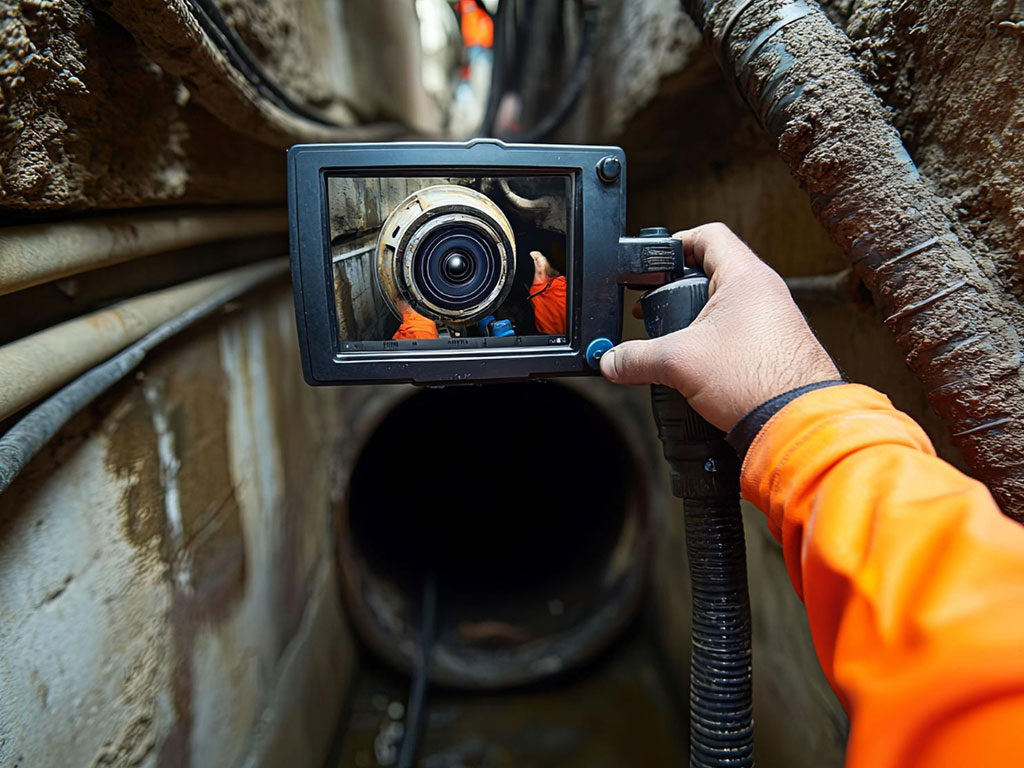
When that happens, the toilet blocks again a few weeks after it was cleared, or several outlets slow down together. Clearing the pan will not cure it. The underground pipe needs cleaning, often with high pressure jetting, and a camera passed along the line will show whether a joint has moved or a length of pipe has cracked.
What We Do When We Arrive
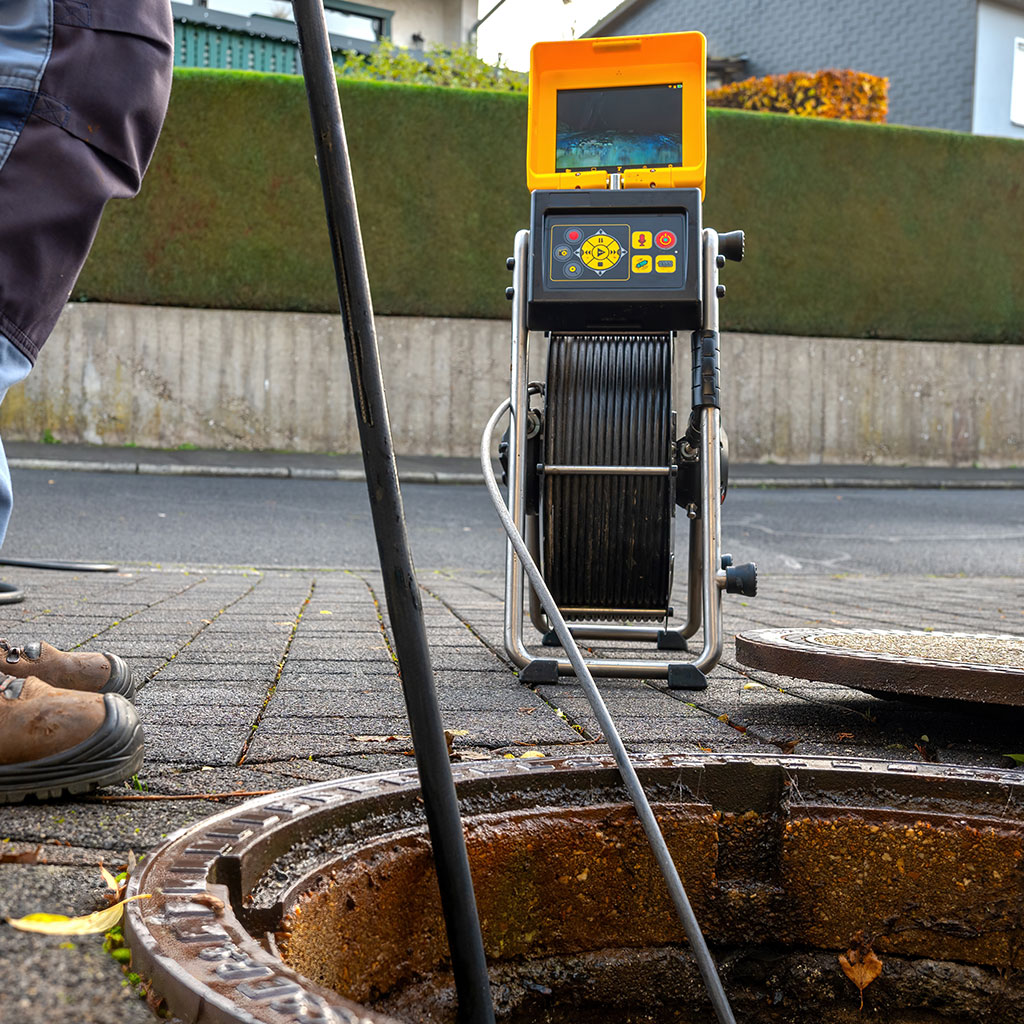
We start by asking what happened, then check the other outlets and the inspection chambers. That tells us where the blockage sits before any tools go near the toilet, and it saves lifting a pan that never needed to be touched. Depending on what we find, the visit can include:
- Clearing the toilet pan and the pipe directly behind it
- Rodding or jetting the soil pipe and underground drain when the fault is further down
- Lifting inspection chambers to see how far the waste has backed up
- A CCTV drain survey when the same toilet keeps blocking
- Telling you when a weak flush or blocked cistern is a plumbing fault rather than a drain fault
- Toilet and drain clearance for shops and offices through our commercial drainage service
Landlords and Lettings in Reigate
Rented flats and houses bring their own challenges. Tenants change, and not everyone is told what the drains in a particular property can cope with. A blocked toilet in a let home also needs dealing with promptly, as the tenant may have no other toilet to use.
We work with landlords and letting agents as well as tenants. We can attend while the tenant is at home, explain the cause in plain terms and give a clear quote with no hidden charges if further work is needed. If a camera survey is carried out, the survey documentation can be kept with your property records.
A short note in the property's welcome pack about wipes and sanitary items is one of the cheapest ways to avoid the next call.
Signs the Problem Is Building Up
Toilets rarely block without warning. The water may rise higher than usual after a flush and then sink back slowly, or you may hear bubbling from the pan when a basin or the washing machine empties. A smell around the toilet or from an outside drain is another clue.
Any of these suggest a partial blockage that is still letting some water through. Dealing with it at this stage is far simpler than waiting until the pan overflows on a Sunday evening.
Homes Across RH2
Whether you live near the town centre, on the slopes towards Reigate Hill or out in Woodhatch and South Park, your home relies on the same simple principle: waste leaves by gravity, and anything that slows it down will sooner or later stop it. Our job is to find that point and clear it.
Your Questions About Toilet Blockages in Reigate
Q: Is it the toilet or the main drain?
A: Run the basin and the bath and watch the toilet. If nothing else is affected, the blockage is probably in the toilet or the pipe right behind it. If the toilet water rises, other outlets back up, or the inspection chamber outside is full, the main drain is blocked.
Q: Can a blocked toilet damage the floor?
A: It can if the pan overflows or leaks around its base. Dirty water soaks into floorboards, laminate and grout and can reach the ceiling below. Stop flushing, mop up promptly and keep the area dry, then check for damage underneath once the toilet is working again.
Q: Is a blocked toilet an emergency?
A: Treat it as urgent if it is the only toilet in the house, if it is overflowing, or if sewage is coming up anywhere else. Our engineers are available 24/7 for emergency call outs. If you have a second toilet and nothing is rising, a booked visit is usually fine.
Q: What should never be flushed?
A: Anything other than toilet paper and human waste. That includes wet wipes of every kind, sanitary products, nappies, cotton buds, dental floss, cooking fat, medicines and kitchen roll. Keep a lidded bin in each bathroom so there is always somewhere else for them to go.
Other Pages for Reigate and Nearby Towns
Contact Us
For a blocked toilet in Reigate or anywhere in RH2, call Monster Drainage on 08006 546213 or email info@monsterdrainage.co.uk. Landlords and agents are welcome to call on a tenant's behalf, and you can ask us for an online estimate.