

Drains in Leatherhead face a test that many towns never see. The River Mole runs beside the town, the water table is high, and a spell of heavy rain can turn a sluggish drain into an overflowing one surprisingly quickly. Monster Drainage provides drain clearance across Leatherhead and KT22 for homes, flats and town centre businesses. Because we answer the phone 24/7, a drain that gives up during a storm does not have to wait until the morning.
Drain Clearance After Heavy Rain in Leatherhead
Leatherhead stands at the northern end of the Mole Gap, the valley the river has carved through the North Downs, on the southern edge of the London Basin. Here the chalk dips beneath the London Clay, and the line where the two meet is known for springs and a high water table. Upstream, much of the river’s catchment is clay that sheds rain rather than soaking it up, so the Mole climbs fast after a downpour.
For your drains, that has two effects. Surface water arrives quickly and in volume, so a gully or pipe that is already partly choked with silt or leaves will overflow long before a clean one would. And where the ground stays wet for weeks, groundwater can seep into cracked or open jointed pipes, carrying soil and grit in with it.
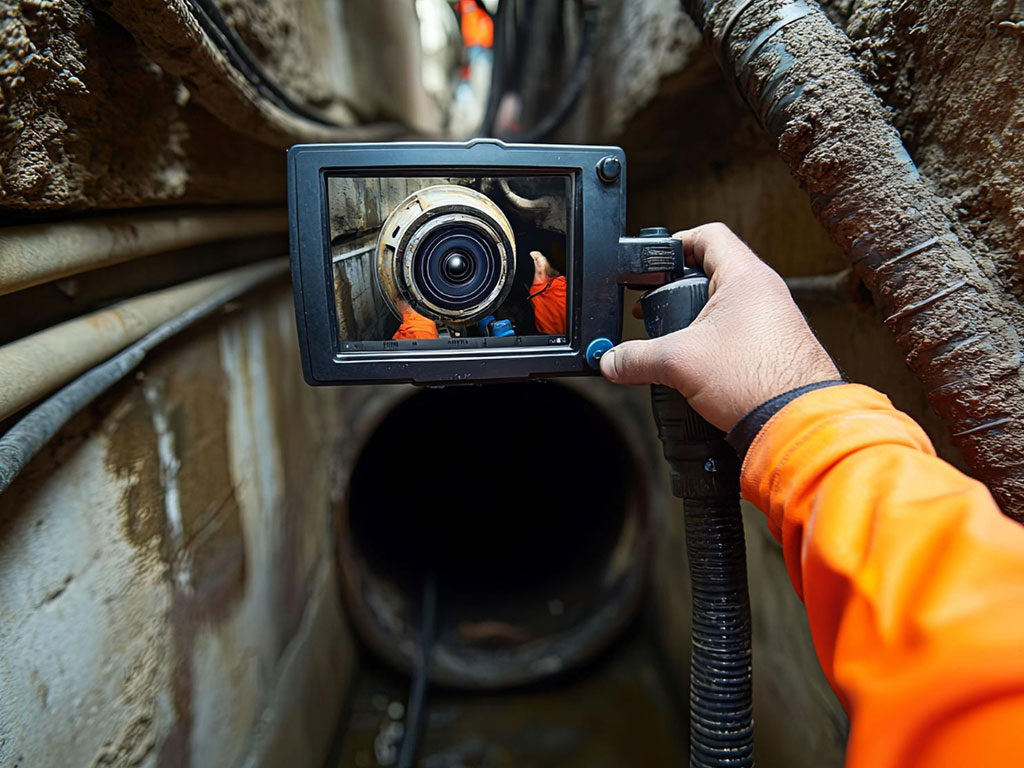
If your drain only struggles in wet weather, one of these is usually the reason. Clearing out the silt gives the pipe back its full capacity, and a camera survey can show whether water is getting in through a defect.
How We Clear a Drain in KT22
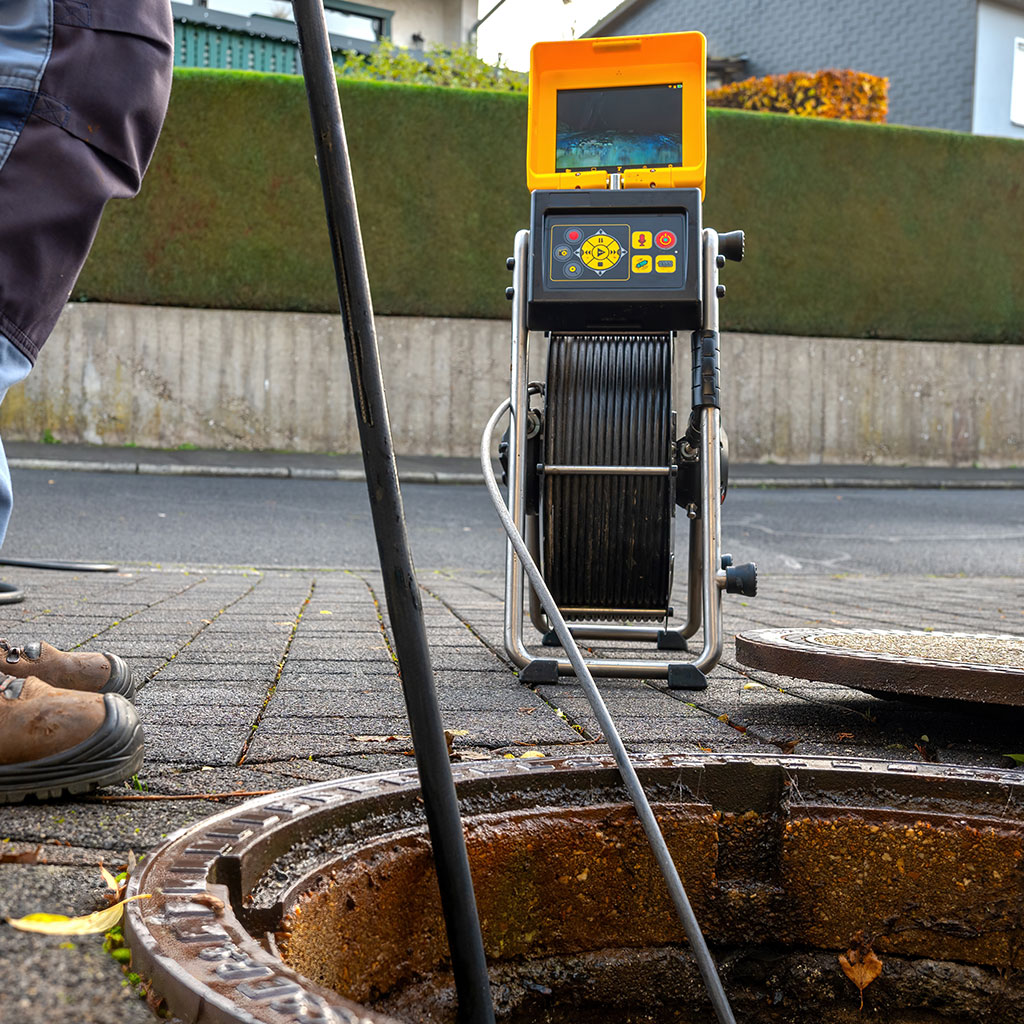
We start by lifting the nearest inspection chamber to see where the water is standing. That tells us whether the blockage is inside the property, between the house and the chamber, or further down towards the sewer. If a chamber has been buried under paving or gravel, we find it before starting rather than guessing at the route of the pipe. From there, we pick the right tool:
- Rods for a single obstruction close to an access point
- High pressure jetting for silt, grease and debris spread along the pipe
- A root cutting head where roots have pushed in through a joint
- Hand clearing for gullies, channel drains and their traps
When the water is running again, we send a test flush down the drain and check that it passes every chamber freely. If the drain has blocked before, we will talk you through whether a CCTV drain survey would be worth having before deciding anything else.
Fetcham, Ashtead and Bookham Drains
Fetcham, Ashtead and Bookham are all part of our KT22 clearance area. Fetcham sits across the Mole, close to the springs that feed Fetcham Mill Pond, while Ashtead and Bookham spread along the foot of the Downs.
Homes here range from older cottages to large detached houses with long gardens, and a long drain run gives leaves, silt and roots more places to settle. Many of these homes also have gullies sitting under trees, so autumn leaf fall is a common reason for a slow outside drain.
Wherever you live, the approach is the same: find the blockage, clear the pipe properly and explain what we found in plain English.
Town Centre Premises and Blocks of Flats
Shops, offices, cafes and blocks of flats in central Leatherhead all have one thing in common: a lot of people relying on the same drains. In a block of flats, several homes often feed one stack and one underground run, so a blockage in the shared pipe can affect every flat above it. In a cafe or restaurant, grease from the kitchen is the usual culprit.
We work with managing agents, landlords and business owners, and we can come outside opening hours so the clearance causes as little disruption as possible. We will agree a time with you first and say whether we need access to a yard, a car park or a basement chamber, so someone can be ready to let us in.
Signs a Leatherhead Drain Needs Clearing
A drain rarely blocks without warning. These are the signs that it is time to book a clearance rather than wait:
- Water rising in the outside gully every time it rains
- A sink, bath or shower that empties more slowly each week
- Gurgling from a plughole when the washing machine drains
- A damp patch or an unpleasant smell near an inspection chamber
Acting on these early usually means one straightforward visit instead of an urgent one.
Rainwater soakaways deserve a mention too. On the chalk towards the Downs they usually drain well, but on clay ground they empty slowly and can fill with silt over the years. A soakaway that overflows in every storm may need its feed pipe cleared, or it may simply have reached the end of its working life. Once the pipe is running, we can tell you which.
Your Leatherhead Drain Questions
Q: My drain only floods in heavy rain. What is wrong with it?
A: Usually the pipe is partly blocked with silt, leaves or roots. In dry weather the small flow squeezes past, but in a downpour the narrowed pipe cannot carry the extra water. Clearing it back to its full size normally solves the problem. If it keeps happening, a camera survey can check for cracks letting groundwater in.
Q: Can you clear the drains for a block of flats?
A: Yes. We clear shared drains and stacks for blocks of flats and can deal directly with the managing agent or landlord. Since October 2011, most shared drains and sewers outside a property boundary have been the water company’s responsibility, so if the blockage turns out to be in a public sewer we will tell you so it can be reported.
Q: Do you use jetting or rodding?
A: Both, depending on what we find. On wet ground, silt is a frequent cause, and silt is best lifted out with water rather than pushed further along with rods. A simple obstruction close to a chamber, such as a wad of wipes, is often quicker to clear with rods, so many visits use the two together.
Q: How can I keep my drain clear?
A: Keep fat, oil and wet wipes out of the drains, fit a strainer in the kitchen sink and clear leaves from outside gullies in the autumn. Routine drain cleaning is rarely needed for a house, but if a drain blocks more than once a year it is worth finding out why.
Other Leatherhead Services
Clearance Elsewhere Nearby
Contact Us
Is a drain slow, smelly or overflowing in Leatherhead, Fetcham, Ashtead or Bookham? Phone us on 08006 546213 at any hour, or email the details to info@monsterdrainage.co.uk. We will listen to what is happening, book a visit and agree the price with you before any work starts.