


Drain clearance in Surbiton often begins with a question nobody in the building can answer straight away: whose drain is this? The town has a great many flats, from Victorian villas divided into apartments to Art Deco courts where every flat drains into one shared pipe, and a blockage in a shared pipe can affect several households at once. Monster Drainage clears communal and private drains across KT5 and KT6 for residents, landlords and the agents who manage blocks on their behalf. We find where the water is stopping, clear it, and tell whoever booked us exactly what we found.
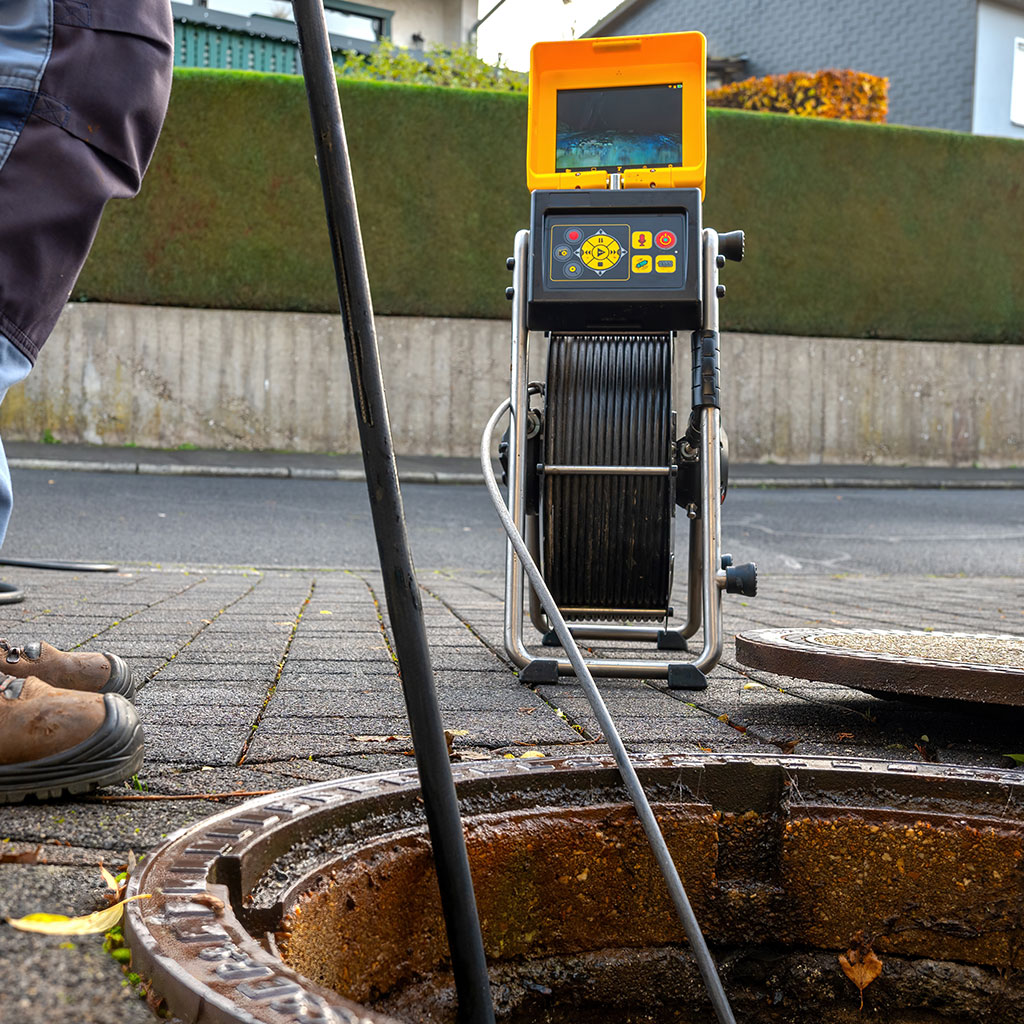
Communal drains in Surbiton flats
Most blocks have a single drain that collects waste from every flat before it leaves the site. When that pipe starts to narrow, the ground floor usually notices first: a sink that empties slowly, a toilet that rises before it clears, or a smell lingering around a manhole cover in the communal garden. Flats higher up may notice nothing at all, which is why ground floor residents are so often the ones who pick up the phone.
Converted villas near St Mark’s are a little different. The original house drain was laid for one household and now serves three or four kitchens and bathrooms. Old clay pipes with simple joints were never designed for that load, so fat, wipes and food scraps settle at the bends far sooner than they once did.
Who arranges the work in a block
In a leasehold building the drains outside the flats normally belong to the common parts, so the freeholder or managing agent arranges and pays for clearance. A pipe serving only one flat, up to where it meets the shared run, is usually that leaseholder’s own responsibility. The lease sets out which is which. If you live in the block and the problem is plainly shared, tell your agent as well as calling us, so the right person can approve the visit.
Pipes inside the boundary of a single block generally stay with the building. Once a drain leaves the site and joins pipework shared with neighbouring properties, it has usually been the sewerage company’s responsibility since October 2011, so it is worth checking before anyone pays for work beyond the boundary.
When one flat’s problem is really the building’s
A blocked basin in a top floor flat is almost always that flat’s own waste pipe. A ground floor toilet that fills up whenever someone upstairs empties a bath tells a different story: the shared stack or the drain beneath it is restricted, and water is escaping through the lowest outlet it can find. If more than one household reports slow drains in the same week, lift the nearest manhole cover if you can do so safely. A chamber full of standing water points to a blockage further down the line, and that is the section we clear.
What a clearance visit to a block involves
We plan each visit around how the building drains and where the access points are. On a typical visit we will:
- Locate the manholes and inspection chambers around the site
- Work out which flats feed into the restricted section
- Clear the blockage with rods or high pressure jetting
- Run water through and check it reaches the next chamber
- Point out anything that suggests a damaged pipe
- Explain what we did to the resident or agent who called
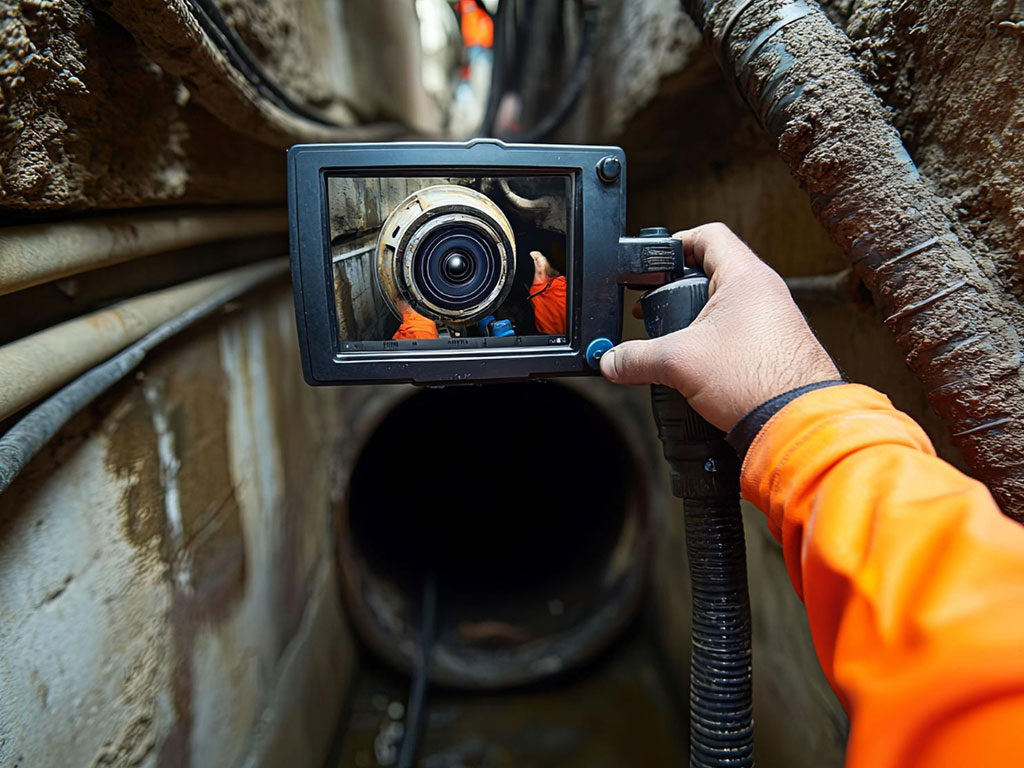
Where a shared run keeps blocking, a CCTV drain survey lets the agent see the cause on screen before deciding what to do about it.
Houses in Tolworth and Berrylands
Away from the flats, much of Tolworth and Berrylands was built in the 1930s, with long rows of semi detached houses that share drainage along the back or down the side passage. On many of these roads two neighbouring houses join one pipe before it reaches the sewer, so a blockage at your end can start in next door’s kitchen just as easily as your own.
Those drains are now around ninety years old. Tree roots, settled joints and years of grease are the usual reasons they slow down. Clearing the pipe brings back the flow, and if the same spot keeps catching, it is worth looking inside it with a camera.
Long Ditton and the KT6 side
Long Ditton lies on the KT6 side, towards the Thames, with a mix of older and newer homes. Outside gullies there can fill with leaves and silt through the autumn, and a gully that cannot empty sends rainwater across a patio or against a wall. Clearing the gully and the short pipe behind it is often quick, and it is one of the simplest ways to stop water standing beside the house.
Landlords letting in Surbiton
If you let a house or flat in Surbiton, your tenant will probably ring you before anyone else. You are welcome to book us yourself and pass on the tenant’s number for access. We speak to the tenant about what they have noticed, attend, and report back to you with what we found and whether anything more is recommended. Any further work comes with a clear quote and no hidden charges.
More from Monster Drainage in Surbiton and nearby
Other pages for this part of Kingston, and for the towns close by:
Questions from Surbiton residents and agents
Q: Who should book drain clearance in a block of flats?
A: Usually the managing agent or freeholder, because shared drains form part of the common parts. A resident can call us first if water is backing up, but let the agent know too so the visit can be approved.
Q: Do you need to get into every flat?
A: Not usually. Most of the work happens at the manholes and chambers outside. We may need to go into one flat if the blockage sits in that flat’s own branch, or to check that its fittings drain once the line is clear.
Q: Can you give the managing agent something in writing?
A: Yes. We explain what we found and what we did. If we carry out a CCTV drain survey, the findings are explained clearly with footage where needed, and the documentation can go on the building’s records or support an insurance enquiry.
Q: Who deals with a gully shared by two houses?
A: If the gully and its pipe serve both homes, the neighbours normally share the job, unless the pipe beyond it has passed to the sewerage company. Drain unblocking on a shared gully is usually straightforward, and we can explain the cause to both households.
Contact Us
To arrange drain clearance in Surbiton, call 08006 546213 or email info@monsterdrainage.co.uk. Tell us whether it is a house or a flat, who manages the building, and which drains are slow. Our engineers are available 24/7 if a drain is overflowing.